Project Overview
Gongchen Jinmao Palace — Public Atrium SculptureHangzhou, China · Mirrored Stainless Steel
Situated beside the historic Gongchen Bridge at the southern terminus of the Beijing-Hangzhou Grand Canal, this project is rooted in a unique cultural heritage. When the Sui Dynasty opened the Grand Canal, Hangzhou became one of China's most prosperous cities.
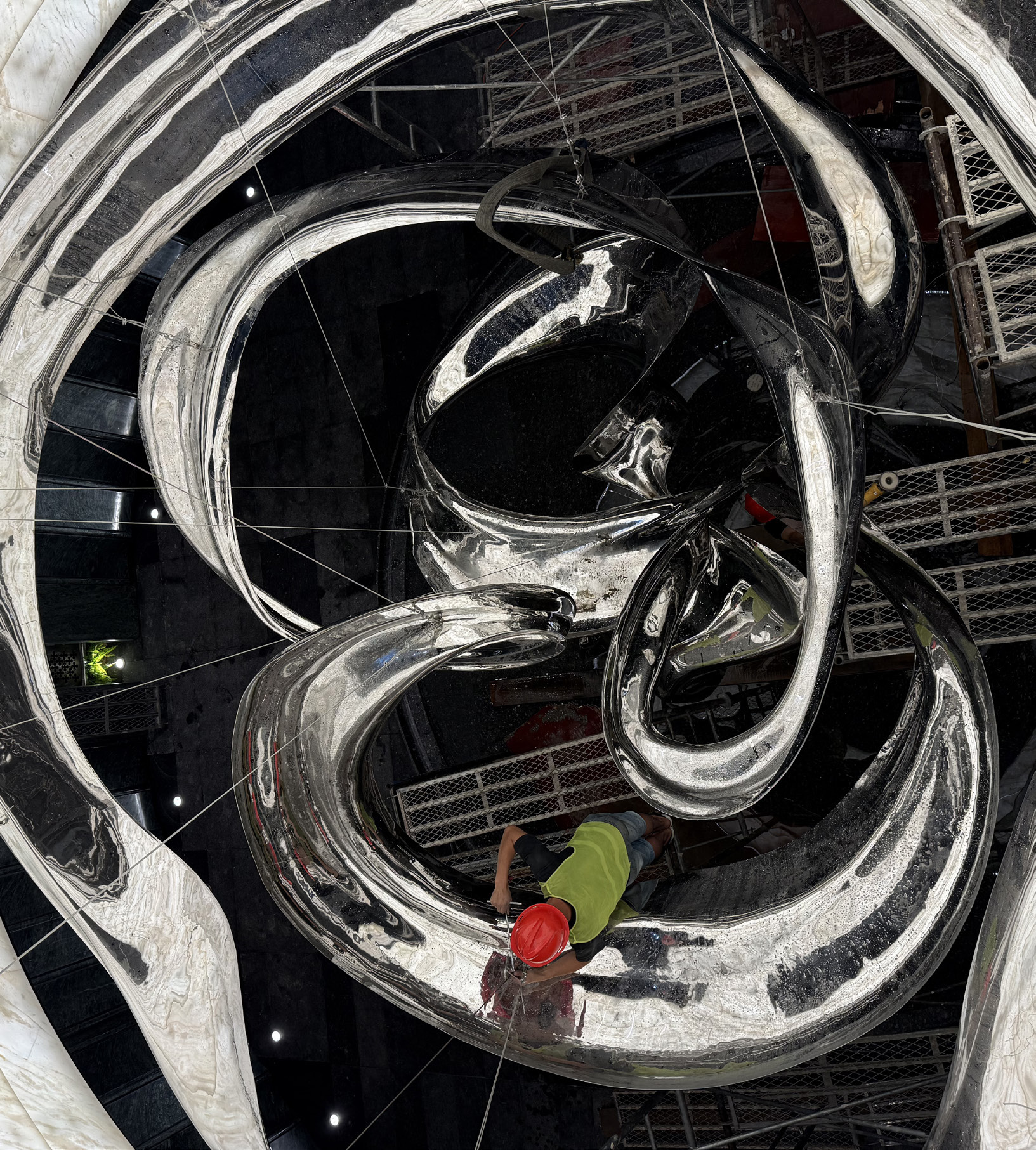
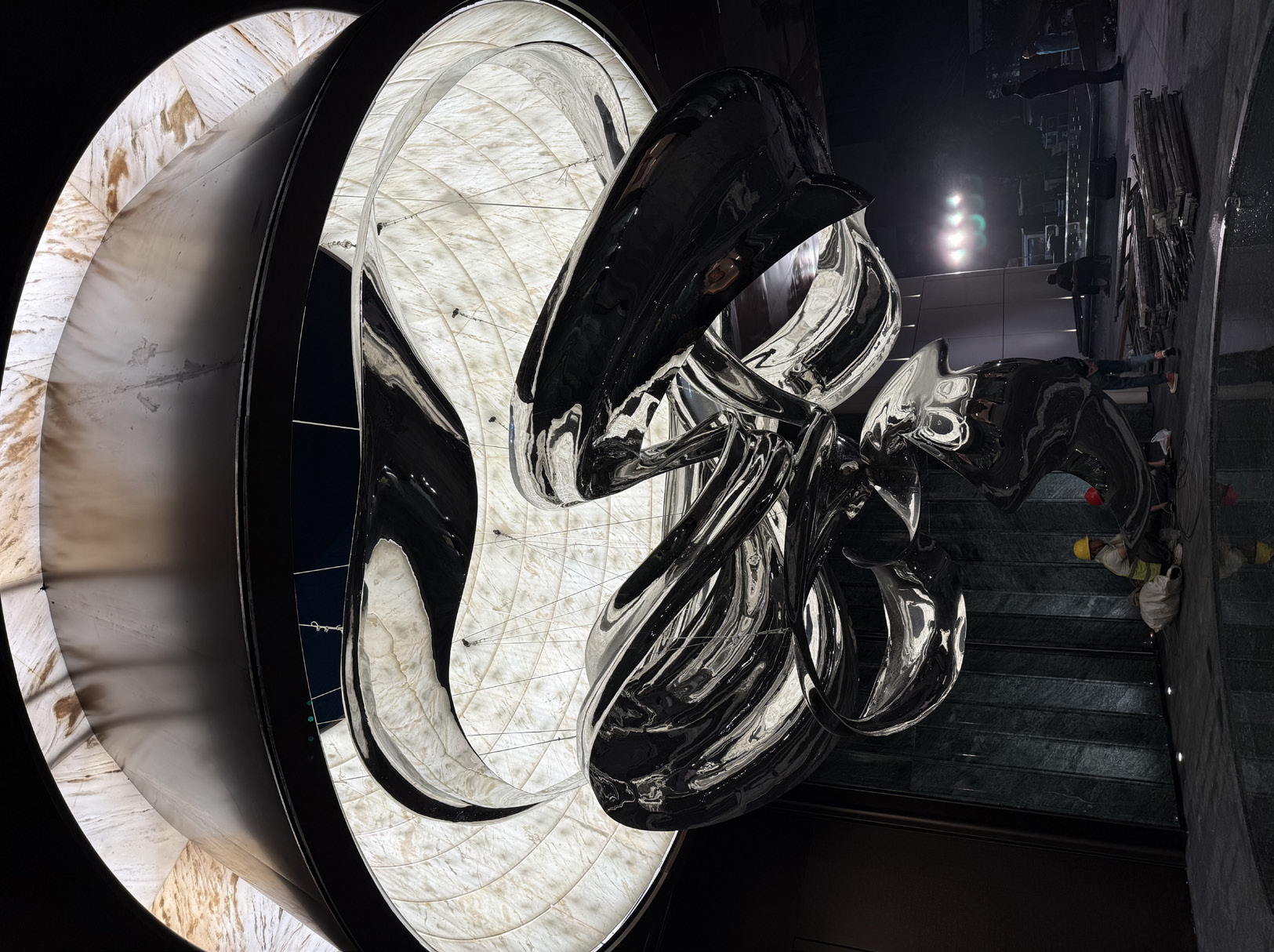
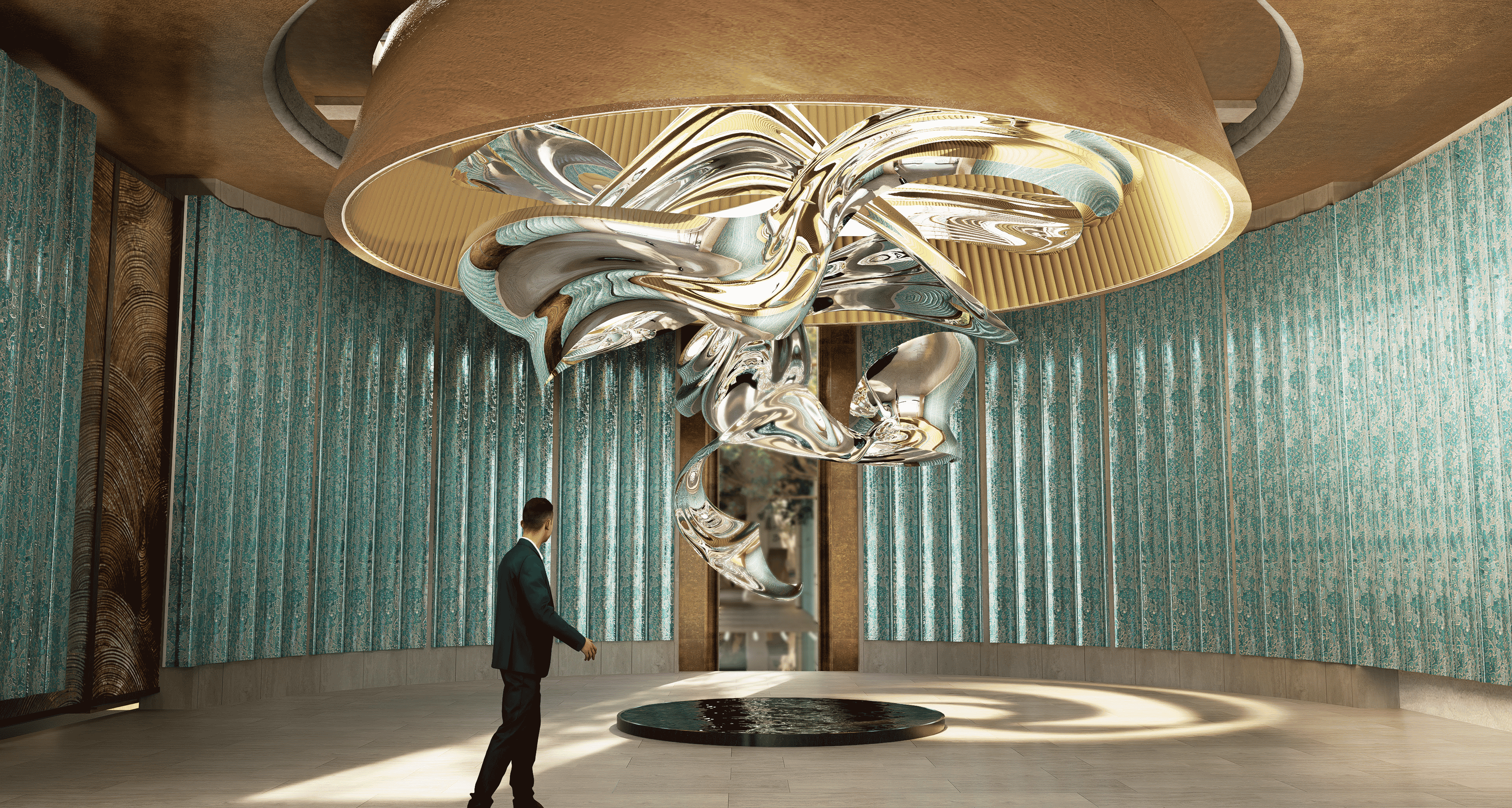
The sculpture's title — 'The Heavenly River Pours Forth, Blessing the City' — references the ancient poetic image of water descending from the sky. Cascading from the atrium skylight, a ribbon of liquid mirrored stainless steel translates the canal's waves into brilliant silver ripples. Leveraging high-reflection materials, it captures the changing scenery of all four seasons, serving as both a metaphor for the Grand Canal's historic prosperity and a contemporary art totem embodying the feng shui concept of 'water falling from heaven — gathering qi to generate wealth'.
The Challenge
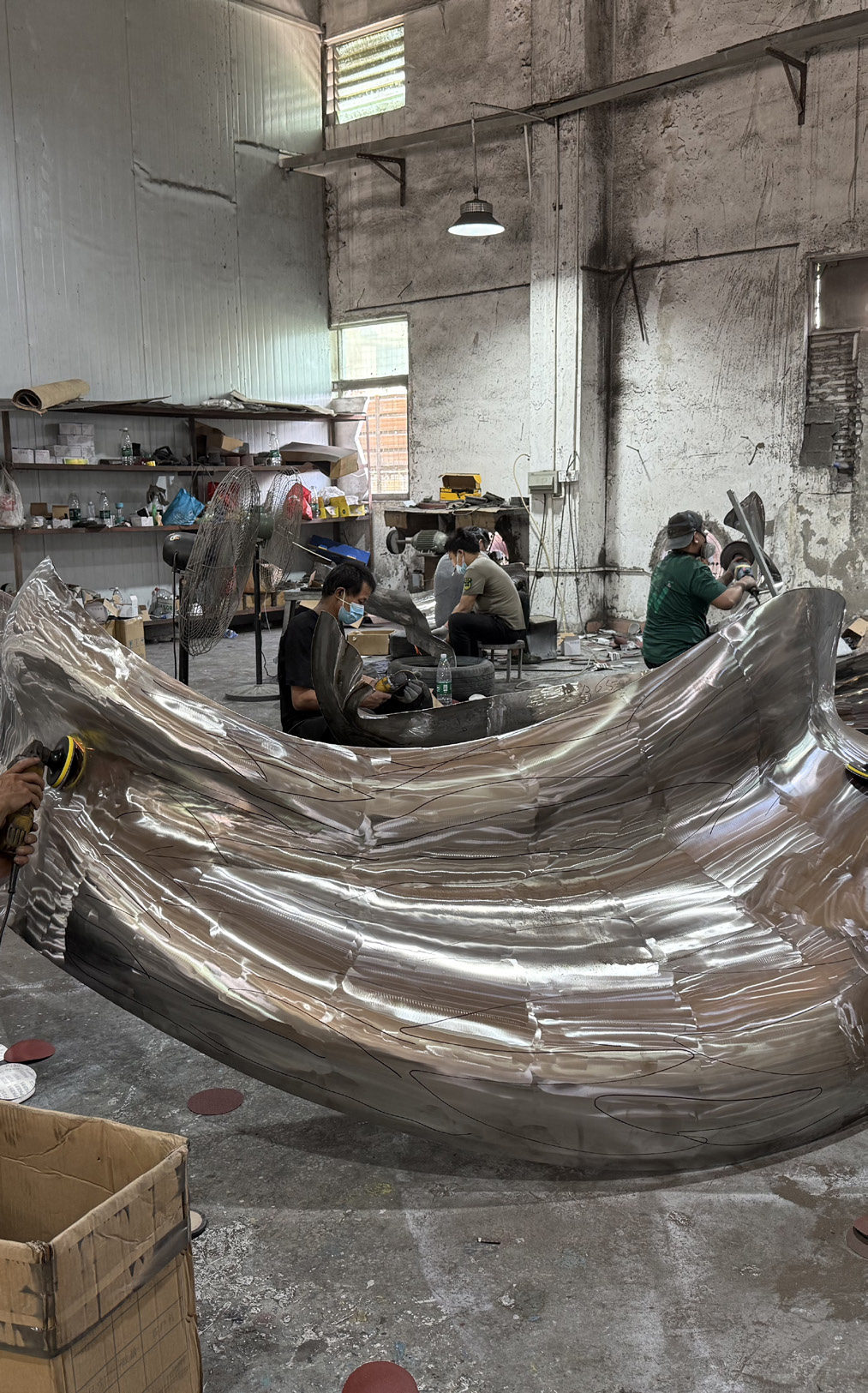
The central difficulty lay in the sheer scale of precision work: over 500 uniquely shaped components, each requiring double-sided hand-forging and mirror polishing — translating into more than 1,000 complex curved surfaces that had to be completely free of forging hammer marks, weld scars, and machining traces.
Artisans described the process as 'carving on an eggshell' — wielding tools by touch and experience alone, coaxing irregular forged metal into a surface that reflects like glass.
Additional challenges:
- Stress-induced deformation: large forged units distort as internal stresses release after welding. Senior craftsmen corrected micro-deformations by hand, without mechanical measurement aids.
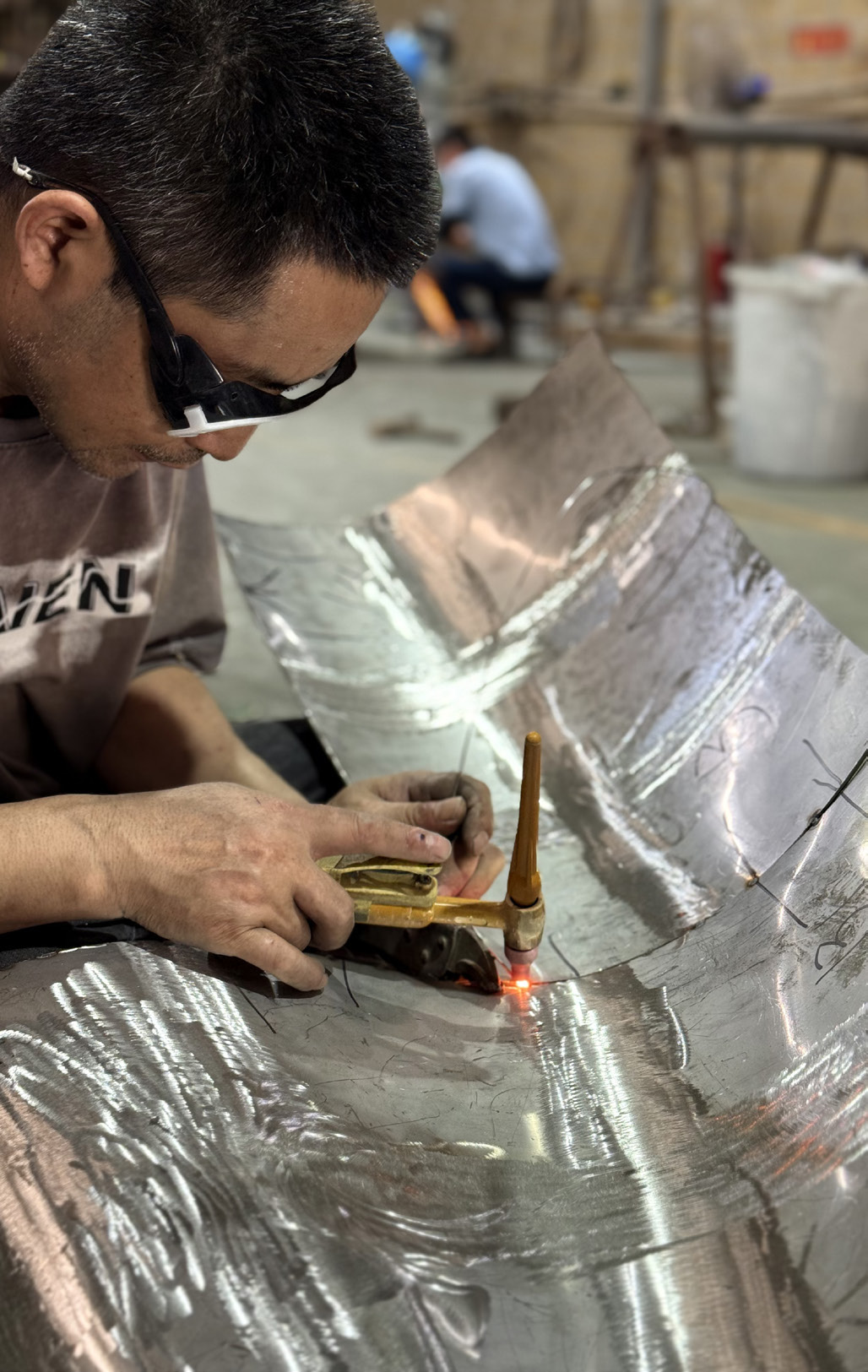
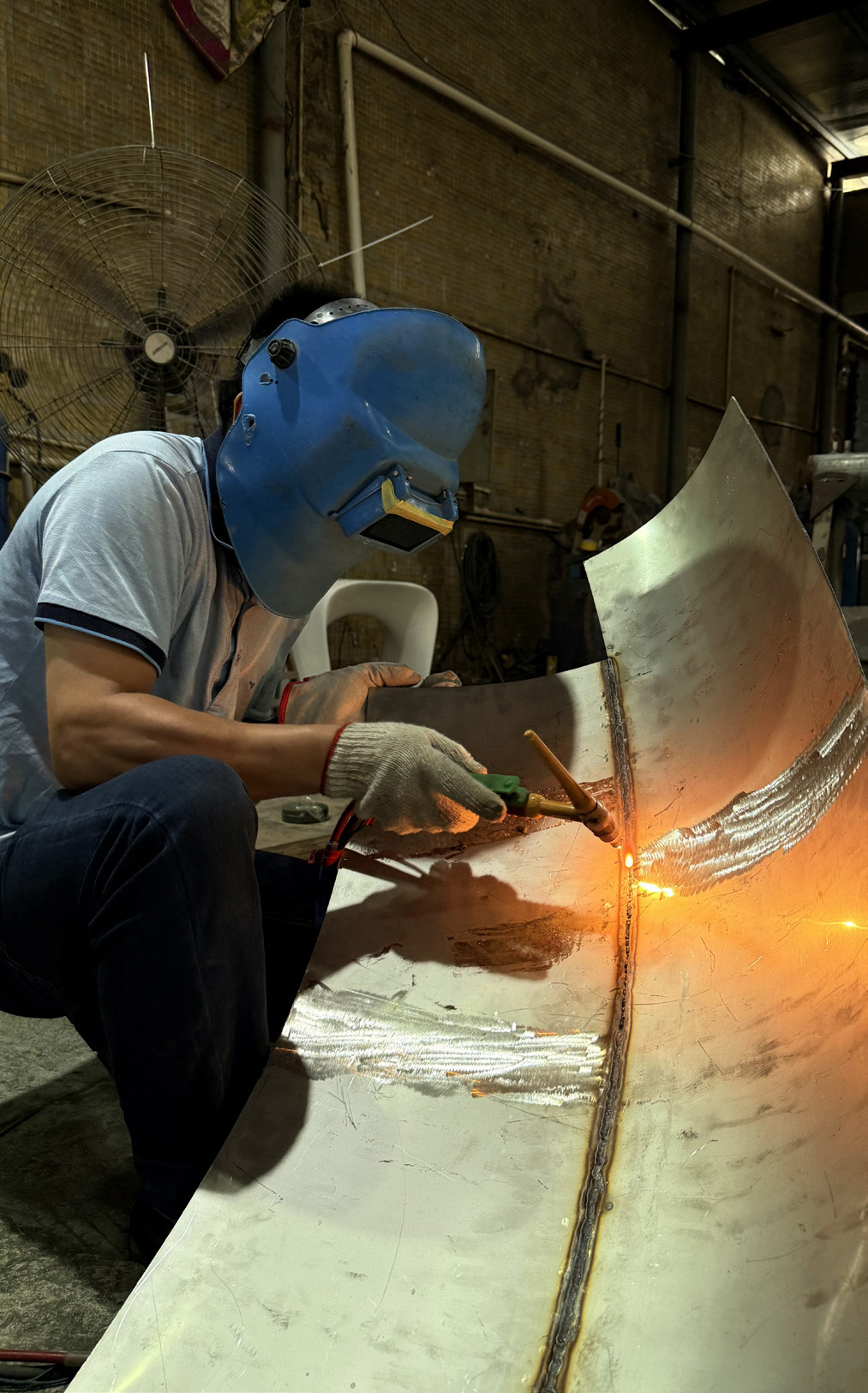
- Seamless full-penetration welding: 500+ pieces had to be joined so weld seams disappeared completely after polishing, giving the impression of a single continuously flowing form.
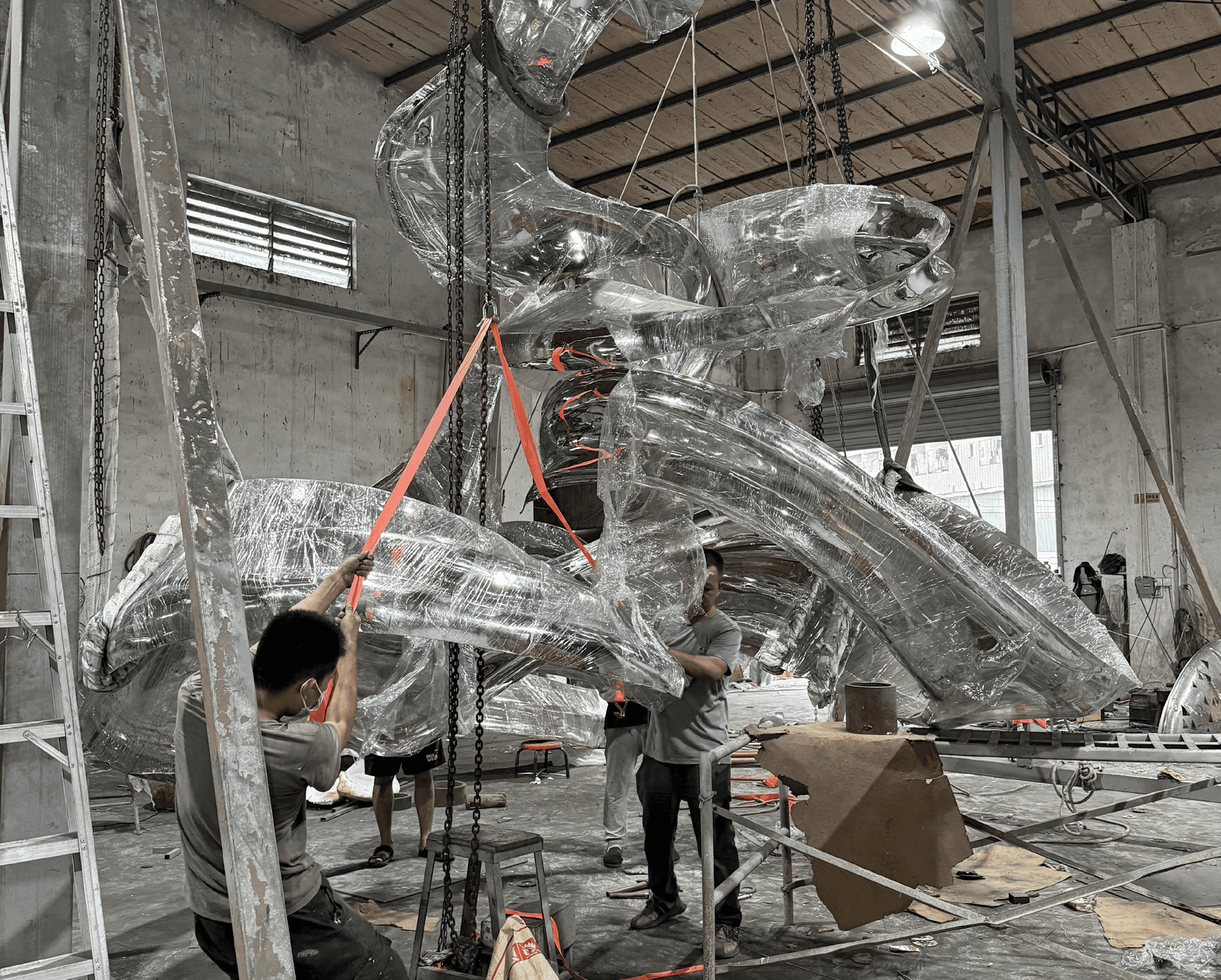
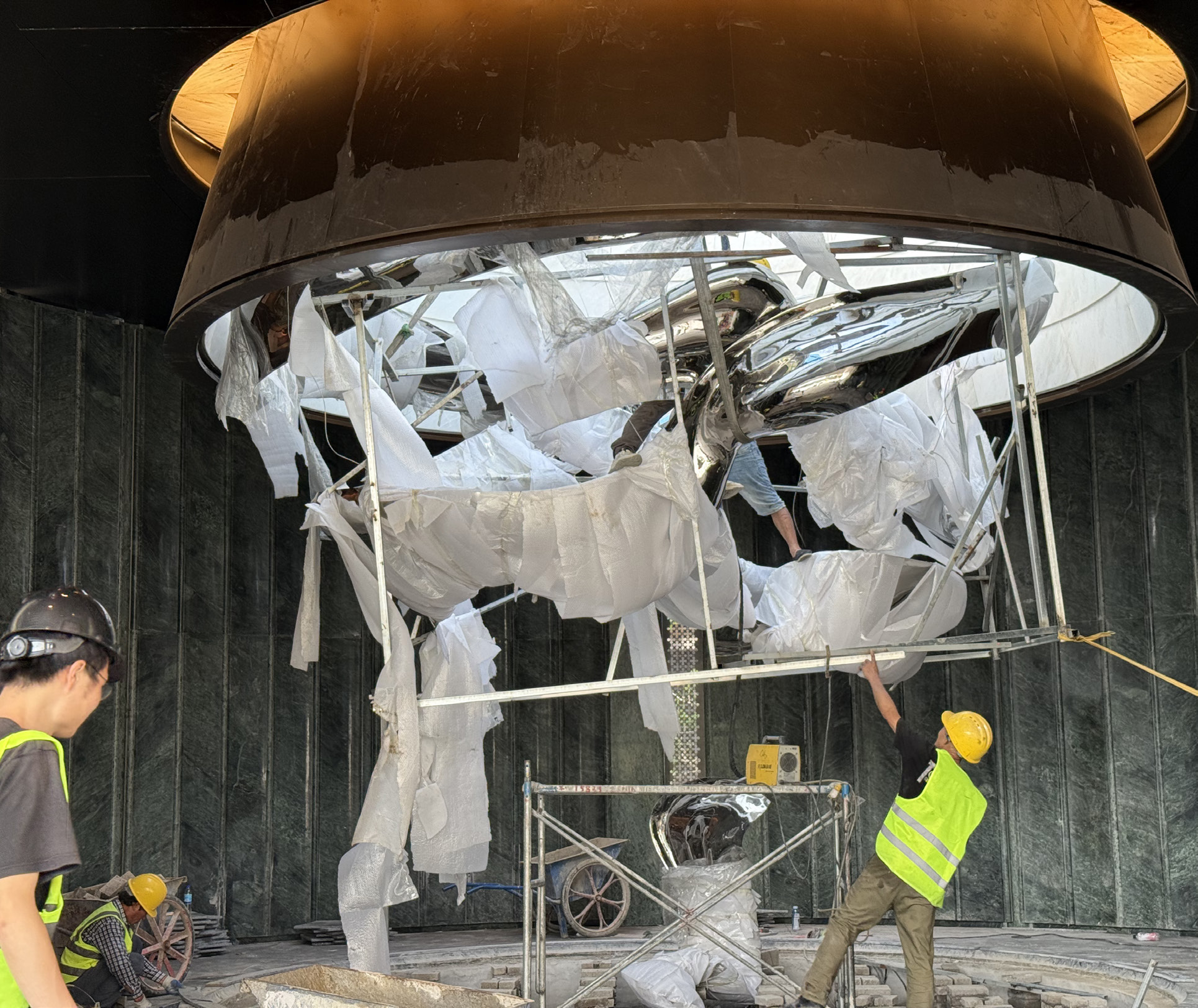
- On-site hoisting: planning the lift path for a monumental mirror-finish artwork in a live construction
environment— without a single scratch — was the final high-stakes test.
Our Solution
AXIS resolved each challenge through a rigorous nine-stage fabrication process, completed entirely in-house.
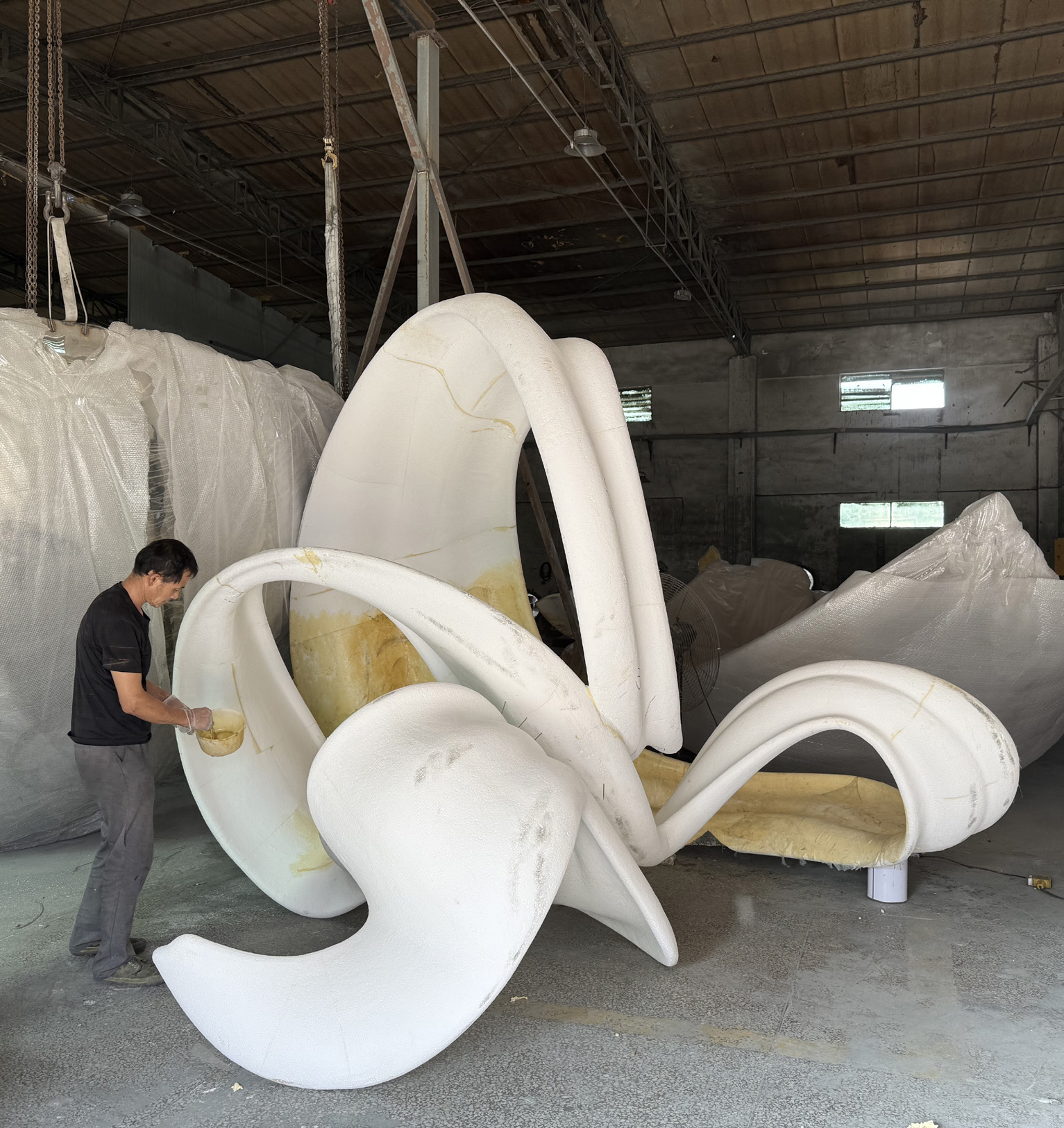
Stage 1 — 3D Carving of 1:1 Foam ModelA full-scale foam model was CNC-carved and then segmented and hardened, serving as a precise template for all lofting and forging work.
Stage 2 — Lofting & Hand-Forging [6 artisans · 20 days]The sculpture was decomposed into 500+ uniquely profiled components, each individually hand-forged — thousands of hammer strikes per piece.
Stage 3 — Full-Penetration WeldingHigh-standard welding joined every forged unit seamlessly, with weld beads required to be uniform, fine, and fully fused into the parent material.
Stage 4 — Forging CorrectionSenior craftsmen manually corrected stress-induced deformations by eye and hand, ensuring absolute precision and fluidity.
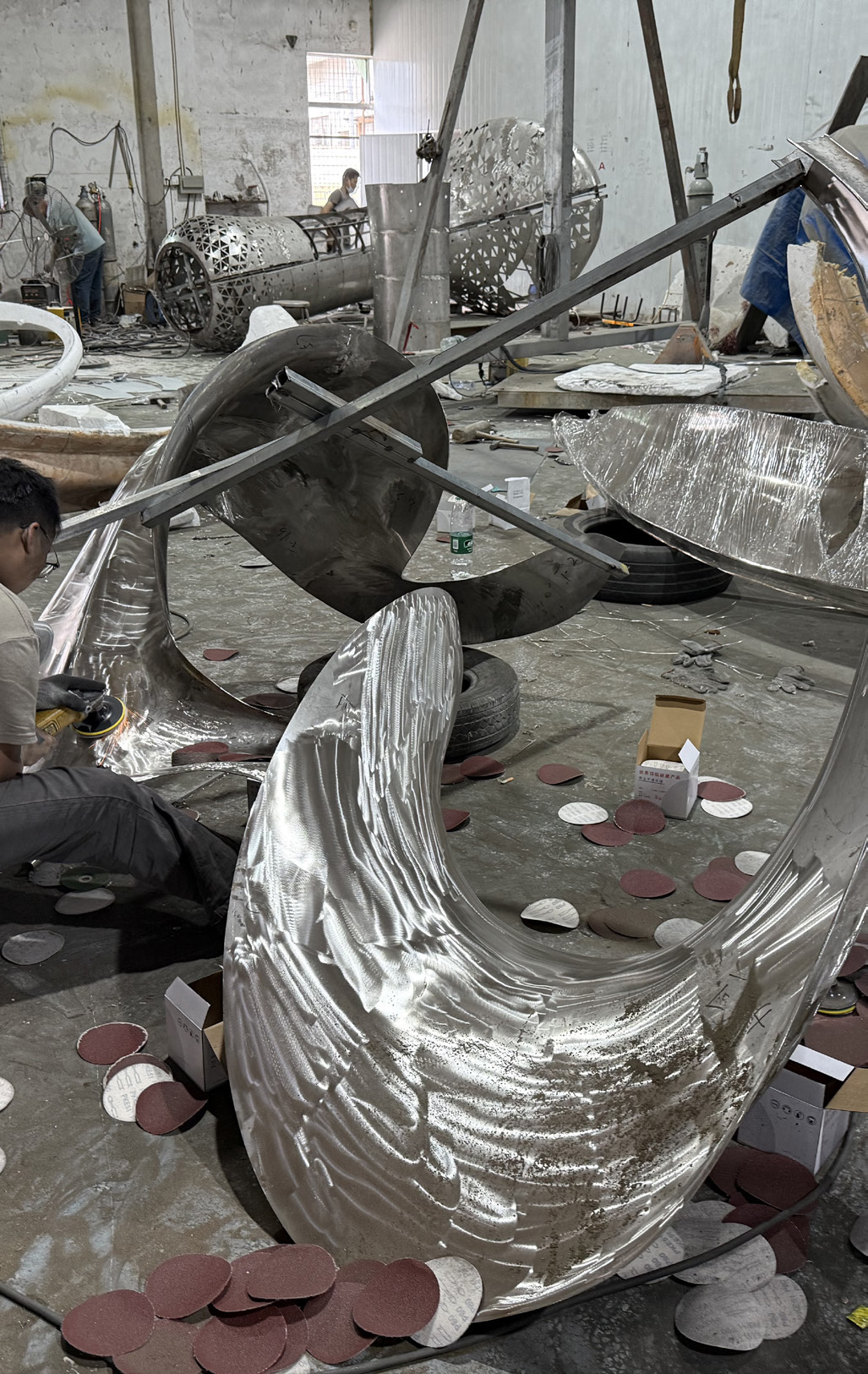
Stage 5 — Initial Grinding [8 workers · 10 days]Multiple grinding tools flattened weld scars and eliminated forging marks across all surfaces.
Stage 6 — Fine PolishingSuccessive rounds of increasingly fine abrasives were applied by hand across every curved surface until the metal showed a natural lustre.
Stage 7 — Mirror Polishing & Waxing [5 polishers · 10 days]Five specialist polishers achieved a true mirror finish through multiple mechanical and hand-polishing passes. A protective wax layer was applied.
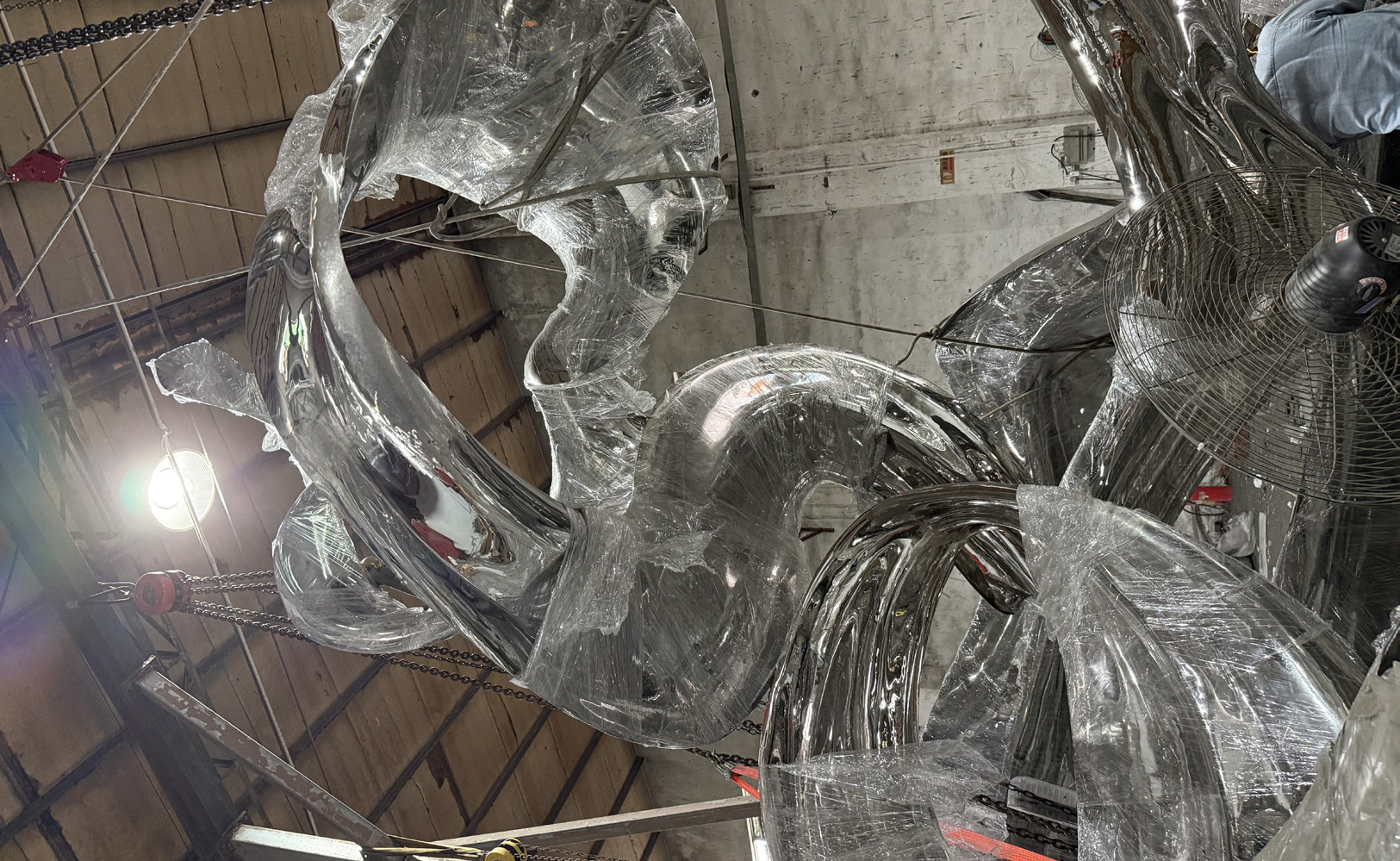
Stage 8 — Pre-Assembly & Quality Inspection [3 senior artisans · 5 days]All components were pre-assembled in full before leaving the workshop — the first complete view of the sculpture.
Stage 9 — On-site Hoisting [3-person team · 4 days and nights]The team spent four days and nights meticulously planning rigging points and lift paths. The large, delicate mirror-finish artwork was guided into its final position without a single scratch, realising the intent of 'cascading down from heaven'.